
Live Event Production: A Checklist Before You Decide on a Crew
Daniel Okafor
Before you commit to a crew for a conference, concert or televised event, work through these questions on vision mixing, signal routing, crewing and the venue itself.
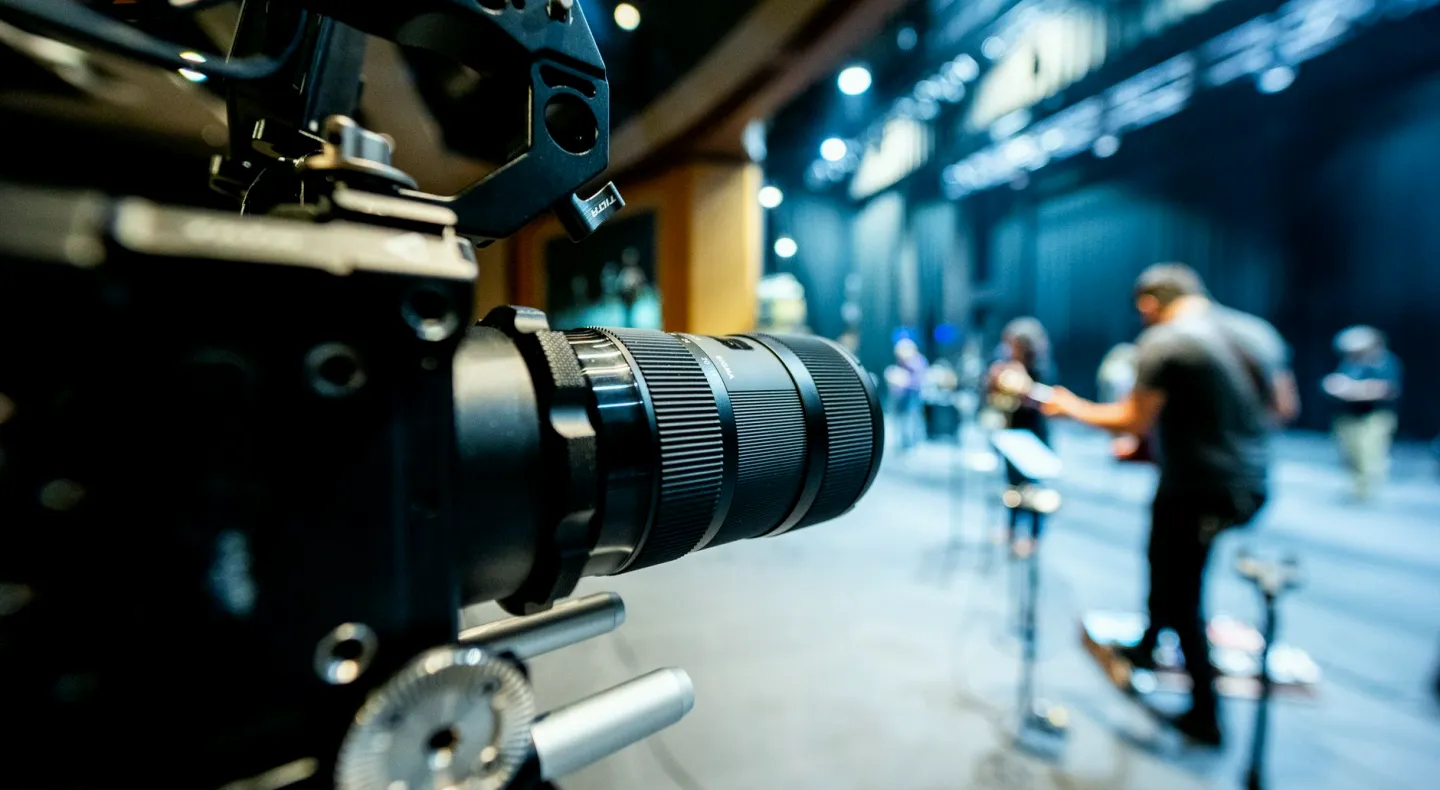
Start with what the audience and the cameras must see
Before anyone talks about equipment, write down what the finished event looks like from two seats: the person in the room and the person watching the feed. A conference with two speakers and a slide deck asks for something quite different from a concert with six acts and a changeover every twenty minutes. If you can describe both views in a few plain sentences, a production company can tell you quickly whether the job needs a small crew or a full vision and routing setup.
Be specific about outputs. Does the feed go to a screen in the building, to a broadcaster, to a recording only, or to all three? Each destination changes how signals are split, how much delay is acceptable and who is responsible for checking the picture at the far end. In my experience, events that skip this question spend the first hour of the get-in arguing about it, and that hour is rarely free.
Crewing: who sits where on the day
A live event is run by people, and the crew list matters more than the kit list. Ask who is mixing vision, who is looking after camera shading, who handles audio, and who is the single point of contact for your producer. Where one person covers two jobs, ask whether that holds up during the busiest ten minutes, not the quietest. A vision mixer who is also watching the audio meters will miss a cue sooner or later.
Check also how the crew communicates. A clear intercom arrangement, with a named person on each channel, prevents most on-the-day confusion. Ask whether camera operators can hear the director, whether stage management is on the same system, and what happens if one belt pack fails. These are ordinary questions, and a competent crew will answer them without hesitation and in some detail.
Signal routing and what happens when something fails
Signal routing is the part clients see least and feel most. Ask for a simple diagram showing each camera, microphone feed and playback source, where they meet, and where they leave the building. You do not need to read every cable label; you need to see whether there is a single point where one failure silences everything. A routing plan with a spare path for the programme output is far easier to defend than one that depends on a lone box.
Ask what is monitored, and by whom. A recorded back-up of the programme feed is cheap insurance for a televised event, and it lets you recover a segment if the main path drops. Also ask how the crew will test the full chain before doors open, including the return route to the broadcaster. A rehearsal that only covers the room does not prove the feed reaches its destination.
The venue: power, space and access
Many live problems begin with the building rather than the equipment. Ask whether the venue has enough power at the points where the crew needs it, and whether a separate supply is available for audio and vision. Cable routes matter too: a run across a public walkway needs covers and a marshal, and a run through a fire door needs agreement beforehand. Raise these with the venue contact early, in writing, so nobody is surprised during the get-in.
Walk the room with the crew lead before the day if you can, or at least send photographs and a floor plan. Camera positions, sightlines to the stage and the place for the control desk all depend on the room. In mid autumn, early dark and cold loading bays add practical limits of their own: allow extra time for the get-in, and check that the load-in door and lift are available when the crew arrives.
Rehearsal, timings and sign-off
A schedule that ends at the moment doors open leaves no room for correction. Ask for a timed plan covering get-in, line check, camera checks, a run of the opening, and a short reset before the audience arrives. If speakers or performers cannot attend a rehearsal, agree who will stand in, so that camera operators and the audio engineer can set levels and framing before the real people walk on.
Agree before the day who has authority to change the running order, and how that change reaches the crew. A producer who calls a change by shouting across the room will lose a camera operator somewhere. A short written running order, updated and shared with each department, avoids that. Finally, confirm who signs off the feed as ready for transmission, and what that person is checking when they do.
Questions to put to any production company
Once the above is written down, you have a brief that any company can answer in specific terms. Send it to the people you are considering and compare the replies for detail, not for confidence. A reply that names crew roles, describes the routing and asks questions about your venue tells you more than one that promises a smooth event. Ask also what is included in the quotation and what would change it, such as extra cameras or a longer day.
Keep a short list of what you will do yourself, too: supply speaker details in good time, confirm venue access, and nominate your own point of contact. Production works best when both sides know their part. If something on your list is still unknown, say so; a good crew would rather plan around an open question than discover it at the get-in.
A live event is decided long before the first camera goes on. If you can say who watches, who does which job, how the signal travels, what the venue allows and who signs off the feed, you are ready to compare crews on facts. Go through the list once with your producer, fill the gaps, and then talk to the companies you are considering. The answers will tell you a good deal about how the day will run.
More from the guides

What Camera Control Systems Cost and What Moves the Price
A plain walk through how camera control work is priced, from the number of cameras to remote heads and shading, and what to settle before asking for a written quotation.
Vision Mixing and Signal Routing Terms Explained for Live Crews
A plain-words guide to the terms live crews use every day: tally, routing, cut, take and return feed, and why each one matters on a busy event.
Daniel Okafor
Send us a message
- Call us
- Write to us